Cyberpunk is a branch of science fiction concerned with how advanced technology changes people's lives, identities, and relationships with power. Networks, artificial bodies, and corporate institutions become part of everyday existence. A useful starting question is who gets to control that technology—and what life is like for everyone who depends on it. Stories often explore technology's effects on society and the growing power of corporations.
Neon streets and glowing screens give a setting an immediate atmosphere. To understand the world behind them, look at the ordinary arrangements that keep its people alive: their jobs, homes, accounts, and access to information. These can make an imagined future feel unsettlingly familiar.
Technology becomes a condition of everyday life
Imagine a city where your apartment door, wages, and medical records all depend on the same identity service. It could be convenient. It would also give the service's operator considerable power over a resident who loses access.
That is a useful way to read a cyberpunk setting. Ask what a device enables, then follow the relationships around it. Who owns the account? Who can suspend it? Can its user leave without losing something essential?
The technology can be impressive and desirable while those questions remain troubling. A fictional memory backup might promise safety, for example, while leaving its owner dependent on someone else's storage and permission. The tension comes from using a system that can help you and still place you at a disadvantage.
Corporate power reaches the individual
An organization becomes tangible when its decisions change someone's day. A withheld payment, a denied request, or a notice with no way to appeal can reveal more about a fictional institution than its logo.
Consider a story in which a worker has completed a job but cannot collect the promised payment. Calling the delay a routine review lets the institution present itself as orderly. For the worker, the consequences are immediate: rent, food, and another day of uncertainty.
This is one way to connect a large political setting to a small human scene. The reader can understand the pressure before learning every corporation's name or the city's history. Details such as who is permitted to ask questions also show how much freedom people have.
Identity becomes vulnerable to the system
Cyberpunk also brings technology close to the body and mind. This close relationship can unsettle a character's sense of identity: a changed body or borrowed memory raises the question of what still belongs to them.
For a reader or player, the question can be personal: which account of a life will the world accept? Imagine a character remembering a conversation that the official record says never happened. A database dispute has become a problem of trust. Who can the character ask for help, and what would count as proof?
An effective scene can leave that question open. It gives the character a reason to worry without requiring a complete explanation of consciousness or a rule that defines every cyberpunk story.
Reading a city through two messages
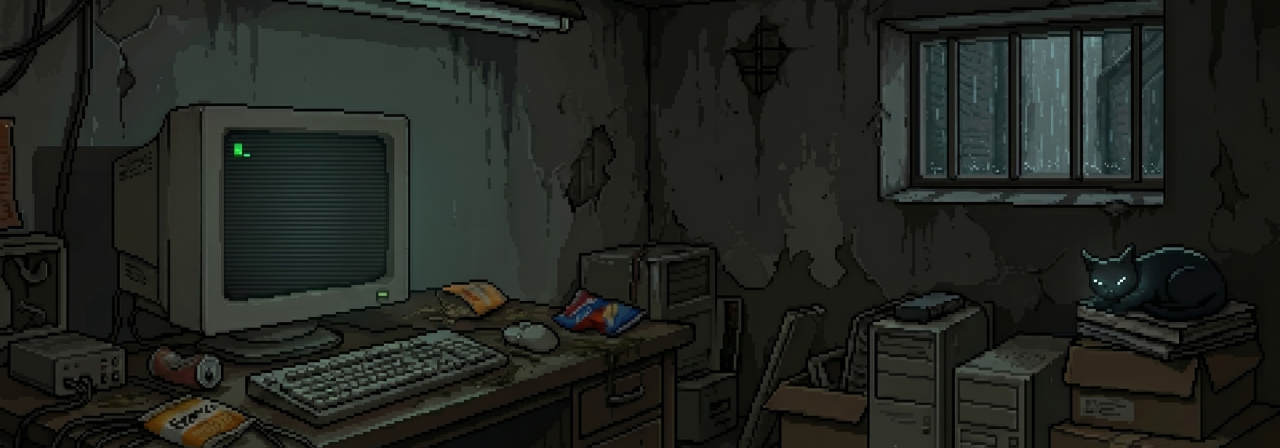
In our cyberpunk idle game, Ghost Terminal, the player operates a terminal, expands production, and discovers records from the surrounding world. Two early district messages show how we connect everyday concerns with the setting. The passages below contain minor early-game story details.
A payment that has become an administrative issue
An intercepted message in the Financial Spine district says a performance bonus has been deferred pending review. It follows with:
This is not a penalty.
This is not a demotion.
This is a temporary liquidity adjustment.
The message then instructs its recipient not to discuss compensation policy on public or semi-public channels.
Our reading of this record starts with the mismatch between the institution's calm language and the worker's position. The sender can name the situation and restrict discussion. The recipient still has to live with the missing payment. A few lines establish that imbalance without a speech from an all-powerful villain.
A building notice about unreliable memories
In Cloud Slums, another message warns residents about a delay in personal memory backups. It lists:
Repeated faces, duplicate conversations,
and misplaced continuity are known side effects.
It ends by asking residents to avoid emotional decisions until synchronization is restored.
Here, the unsettling detail is the format. The notice treats disruption to someone's experience of life as a maintenance issue. It offers no personal reassurance, only an instruction to wait. The record invites the player to consider how much of a resident's private life depends on the building's systems.
Questions to carry into a cyberpunk game
When exploring a setting, look for the consequences of its technology:
- Who can grant or withdraw access to something essential?
- What happens to a person when an institution's records are wrong?
- Which risks are described as ordinary operating conditions?
- Where do people find room for friendship, resistance, or a choice of their own?
These questions help connect a game's visual atmosphere with the lives it depicts. A small message can give the city outside the screen a human cost.